


Ir al contenido
Caronte
Caronte
Ir al contenido
  • Inicio
  • Caronte
  • NASE
    • Materiales del curso NASE
  • ENA
  • Astronomía
    • Astrofísica
    • Astrofotografía
  • Contaminación Luminosa
    • Proyecto de ley de protección de cielos oscuros
Un astrónomo aficionado revela un retrato colorido del vecino formador de estrellas más cercano a la Tierra Semilleros Científicos de la Fundación CIDA fortalecen conocimientos sobre astronomía Eclipse de luna (noche del 13 al 14 de marzo 2025)

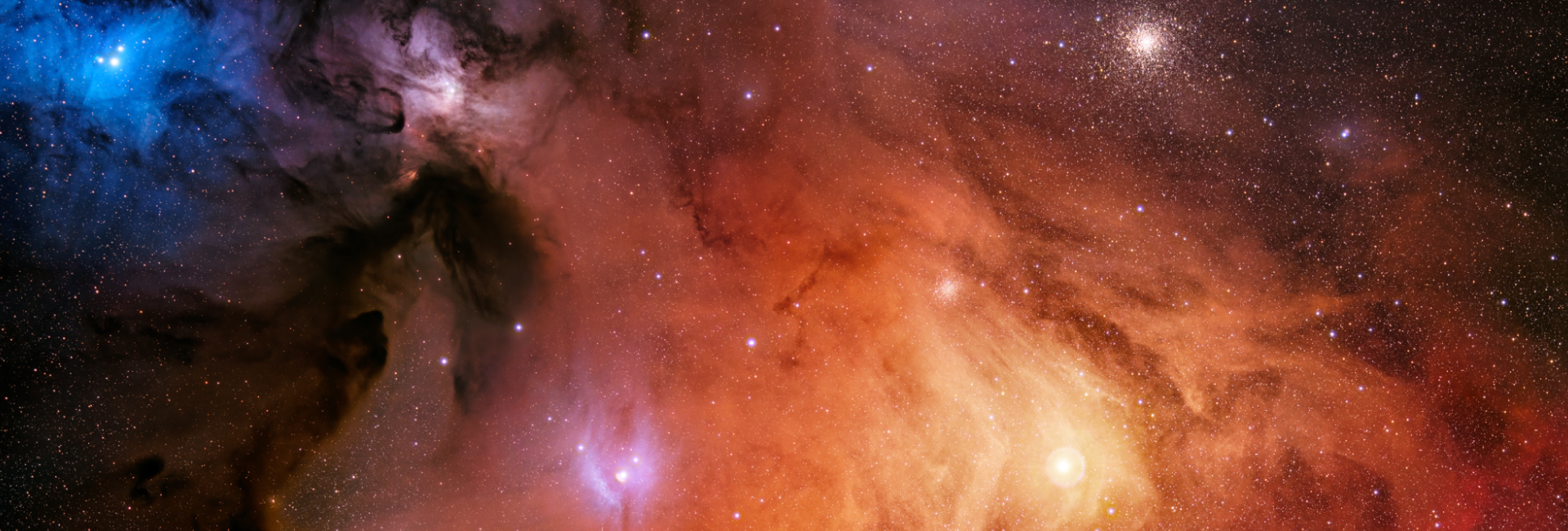
Un astrónomo aficionado revela un retrato colorido del vecino formador de estrellas más cercano a la Tierra

El astrofotógrafo Greg Meyer capturó una vista impresionante de la guardería estelar Rho Ophiuchi y del cúmulo globular Messier

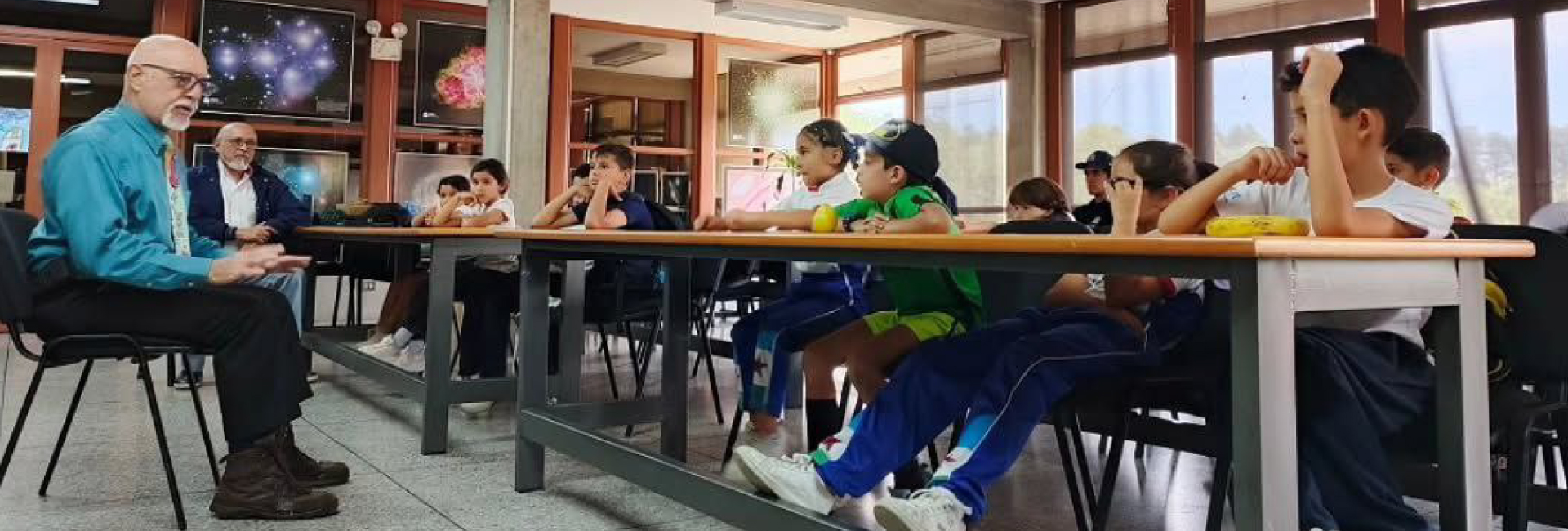
Semilleros Científicos de la Fundación CIDA fortalecen conocimientos sobre astronomía

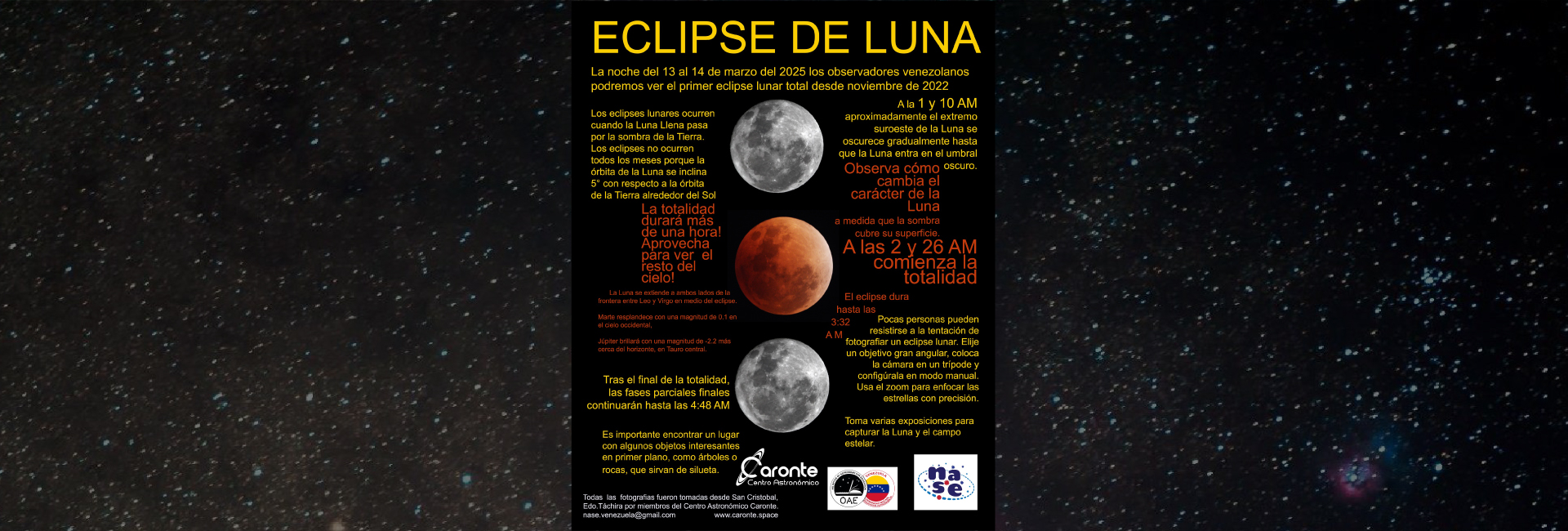
Eclipse de luna (noche del 13 al 14 de marzo 2025)

  • Imagenes del día Nasa.gov

    • Webb Sees Turbulent Star Nursery

      In this Picture of the Month from the NASA/ESA James Webb Space Telescope, we visit a turbulent cauldron of star formation to see what is brewing inside dense clumps of gas.
    • NASA's Neo Surveyor Sunshade

      The large sunshade of NASA’s Near-Earth Object Surveyor mission is inspected by a technician at BAE Systems Space & Mission Systems in Boulder, Colorado, in late July.
    • NASA's X-59 Aircraft and Test Pilot

      NASA test pilot Mike Lippert poses for a photo ahead of his first time flying the agency's X-59 quiet supersonic research aircraft on Oct. 21, 2026.
    • RS-25 Engine Tests at NASA Stennis

      Teams at NASA’s Stennis Space Center near Bay St. Louis, Mississippi tested RS-25 engine No. 10001 on Oct. 21, 2026.
    Ver esta publicación en Instagram

    Una publicación compartida de Diario del Pueblo (@diariodlpueblo)

  • Space.com

    • On this day in space! Oct. 28, 1971: Britain launches its 1st satellite Prospero into space on a Black Arrow rocket

      On Oct. 28, 1971, the United Kingdom launched its first satellite. The satellite was named Prospero, but it was also known as the X-3. This wasn't Britain's first satellite, but it was the first and only one the British space program launched with one of its own rockets. The first six British satellites all launched from the United States on...
    • 5 days beneath the waves: What it's like to live in an underwater 'space station'

      Living underwater was surprisingly peaceful. It was in many ways exactly what I imagine living on Mars would be like one day. There were no humans around us, except for my three SEA STAR crewmembers and me. Apart from the human noises we made, we couldn't hear anything other than the life support systems keeping us alive submerged 22 feet...
    • ISS astronaut will conduct Canada's 1st spacewalk in 7 years on Oct. 29: Watch it live

      The next International Space Station (ISS) spacewalk will have more maple-leaf flavor than usual, as a Canadian astronaut will become the first to go outside the orbiting complex in seven years.Canadian Space Agency (CSA) astronaut Joshua Kutryk, who's also a colonel in the Royal Canadian Air Force, will help the ISS boost its power supply during his first-ever spacewalk on...
    • Meet Apeiron, Virgin Galactic's 1st 'Delta-class' space plane

      Virgin Galactic has officially unveiled the first space plane in its next-gen "Delta" line, and announced the results of the worldwide vote to choose its name.Spaceship Apeiron will be the first Delta-class vehicle, Virgin Galactic revealed on Wednesday (Oct. 28). Apeiron (pronounced "A'-per-on," according to the announcement) takes its name from the ancient Greek word meaning "boundless," and was selected...

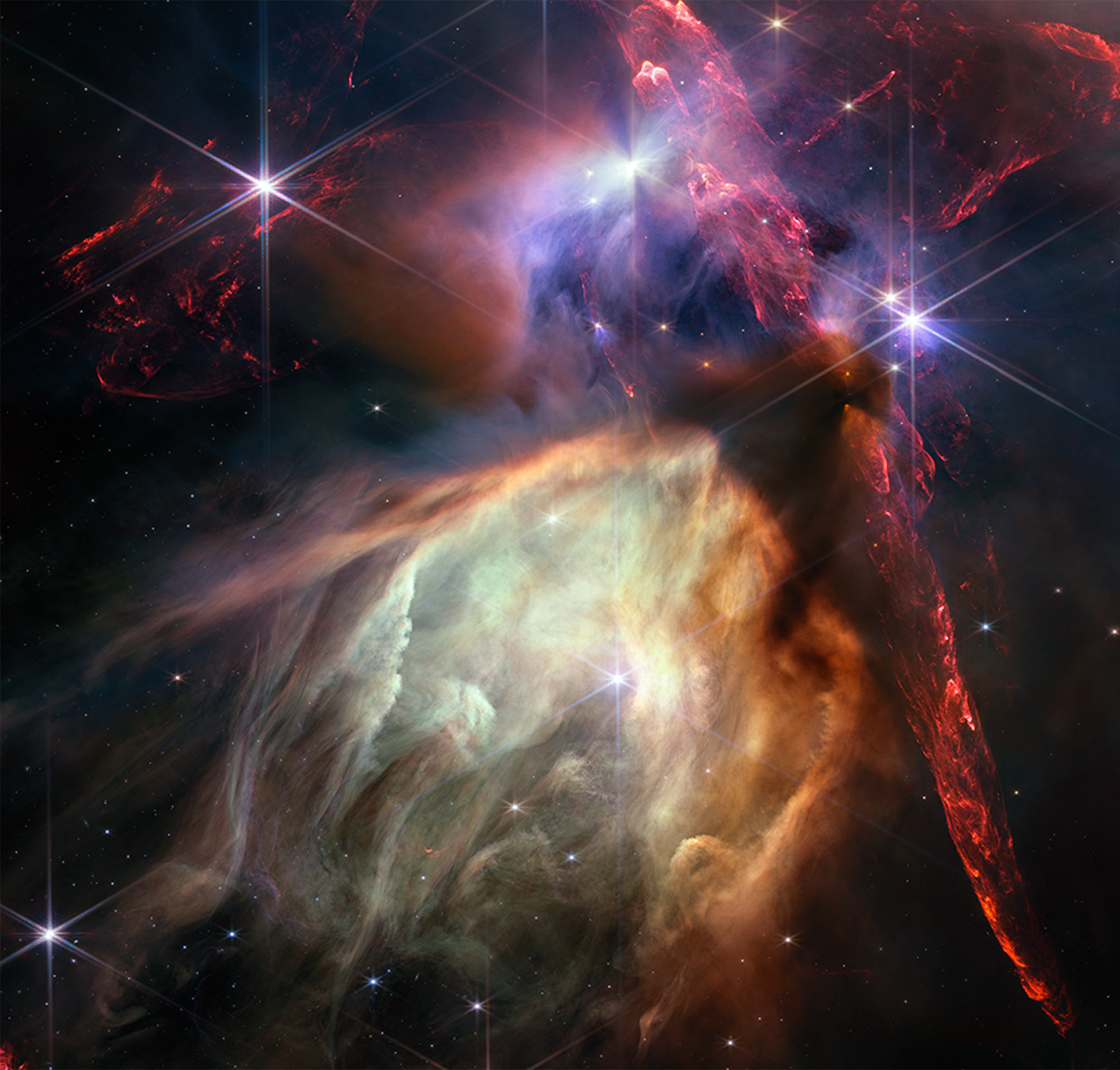
    Rho Ophiuchi (imagen de NIRCam)
  • Caronte Informa N°1 – 10-03-84 (historia de CAC)

    Caronte 27 febrero, 2025 4 marzo, 2025

    Caronte Informa N°1 – 10-03-84 (historia de CAC)

    Leer más

    Como empezar en Astronomía

    Caronte 24 febrero, 2025 4 marzo, 2025

    ¿Sabía que puede ver, sin ayuda óptica, una galaxia que está a 2,5 millones de años luz?

    Leer más

    «‹7891011›»

    Cúmulo de galaxias MACS J1423 (imagen de NIRCam)
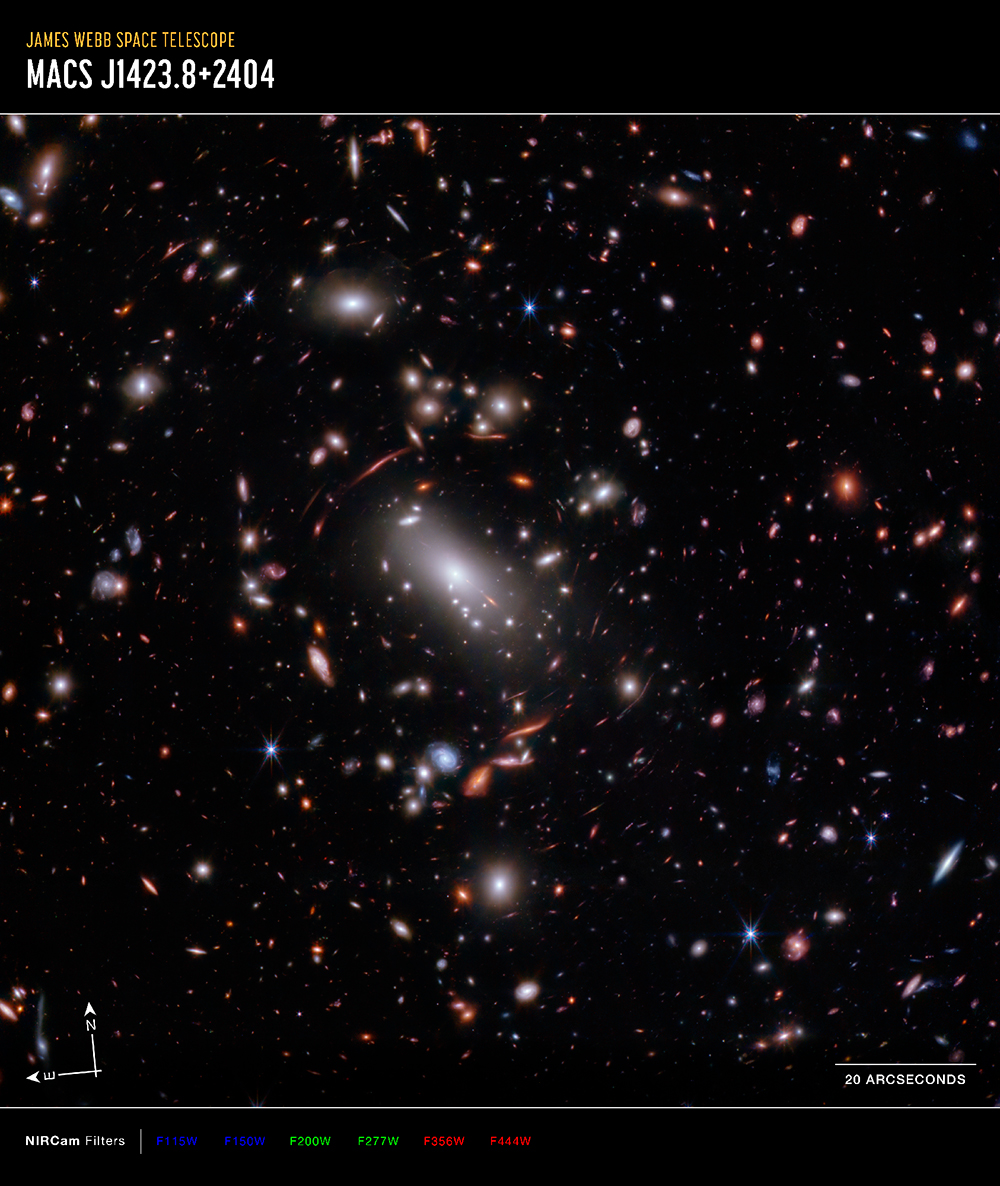

    Miles de galaxias brillantes están unidas entre sí por su propia gravedad y forman un cúmulo masivo clasificado formalmente como MACS J1423.
    El óvalo blanco brillante más grande es una galaxia elíptica supergigante y el miembro dominante de este cúmulo de galaxias. El cúmulo de galaxias actúa como una lente, magnificando y distorsionando la luz de los objetos que se encuentran detrás de él, un efecto conocido como lente gravitacional que tiene grandes beneficios para la investigación. Los astrónomos pueden estudiar las galaxias con efecto lente en detalle, como la galaxia Firefly Sparkle.
    Esta imagen de 2023 es de la NIRCam (cámara de infrarrojo cercano) del telescopio espacial James Webb. investigadores utilizaron Webb para estudiar el mismo campo que el telescopio espacial Hubble fotografió en 2010. Debido a su especialización en imágenes de infrarrojo cercano de alta resolución, Webb pudo mostrar a los investigadores muchas más galaxias con mucho más detalle.
    Web oficial Telescopio James Webb
    © Caronte 2025. Todos los derechos reservados.
    Funciona con Nirvana & WordPress.
    Facebook Twitter Instagram
    imunify-bot-check