
Ir al contenido
Caronte
Caronte
Ir al contenido
  • Inicio
  • Caronte
  • NASE
    • Materiales del curso NASE
  • ENA
  • Astronomía
    • Astrofísica
    • Astrofotografía
  • Contaminación Luminosa
    • Proyecto de ley de protección de cielos oscuros
Un astrónomo aficionado revela un retrato colorido del vecino formador de estrellas más cercano a la Tierra Semilleros Científicos de la Fundación CIDA fortalecen conocimientos sobre astronomía Eclipse de luna (noche del 13 al 14 de marzo 2025)

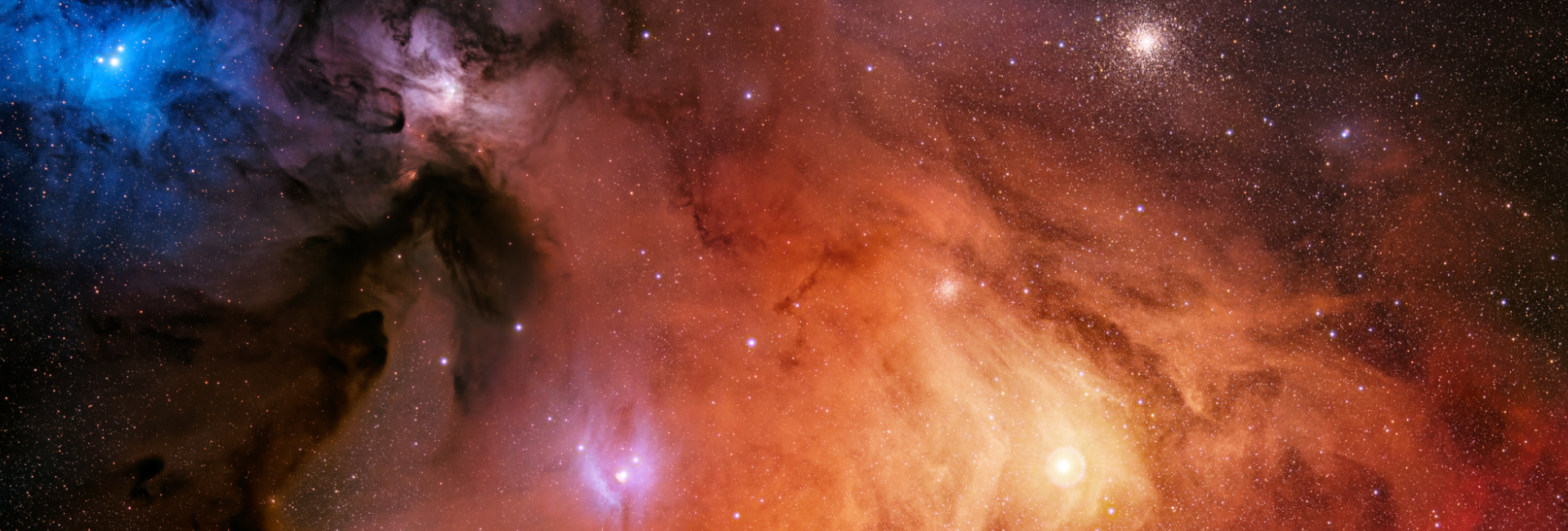
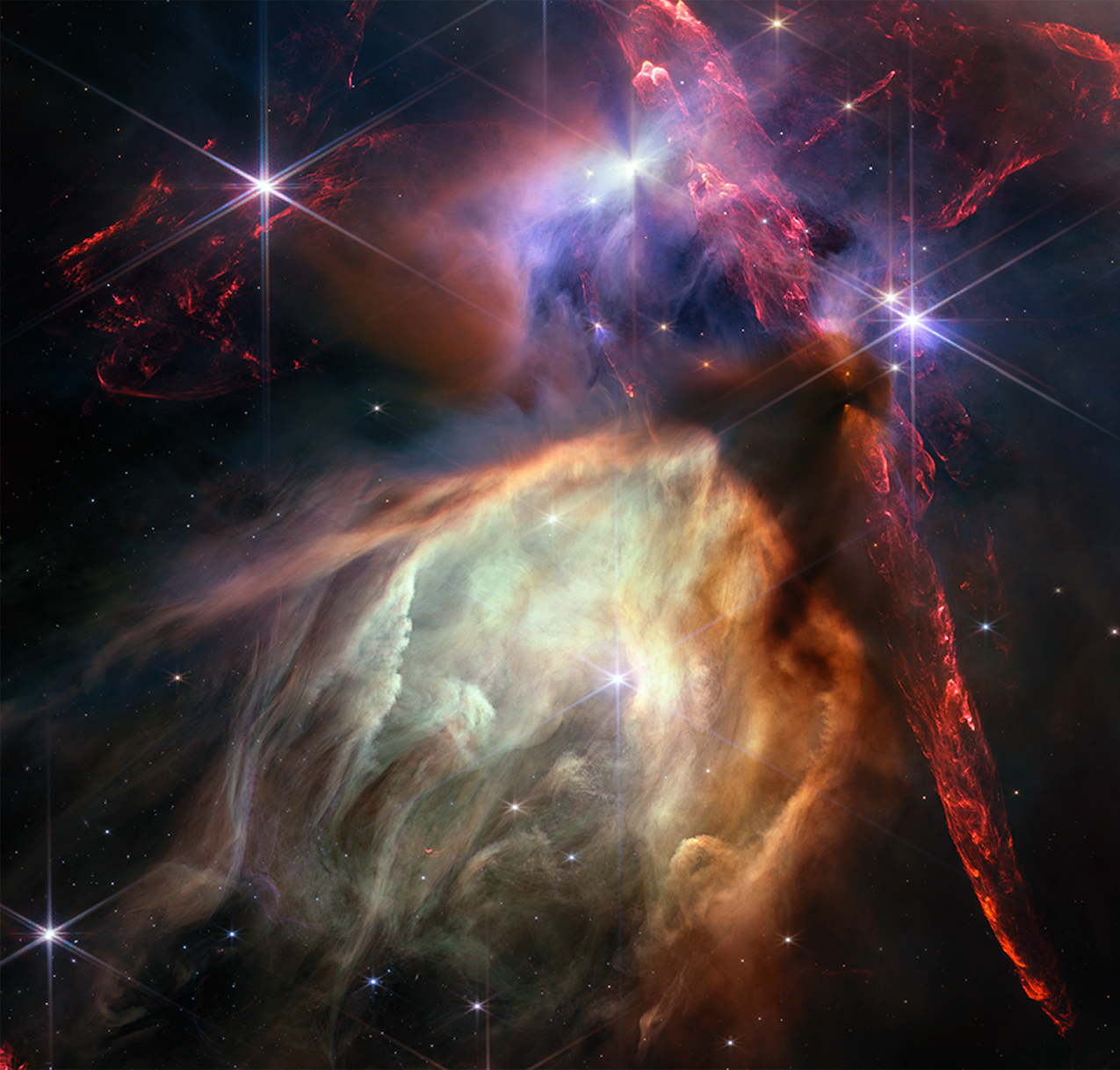
Un astrónomo aficionado revela un retrato colorido del vecino formador de estrellas más cercano a la Tierra

El astrofotógrafo Greg Meyer capturó una vista impresionante de la guardería estelar Rho Ophiuchi y del cúmulo globular Messier

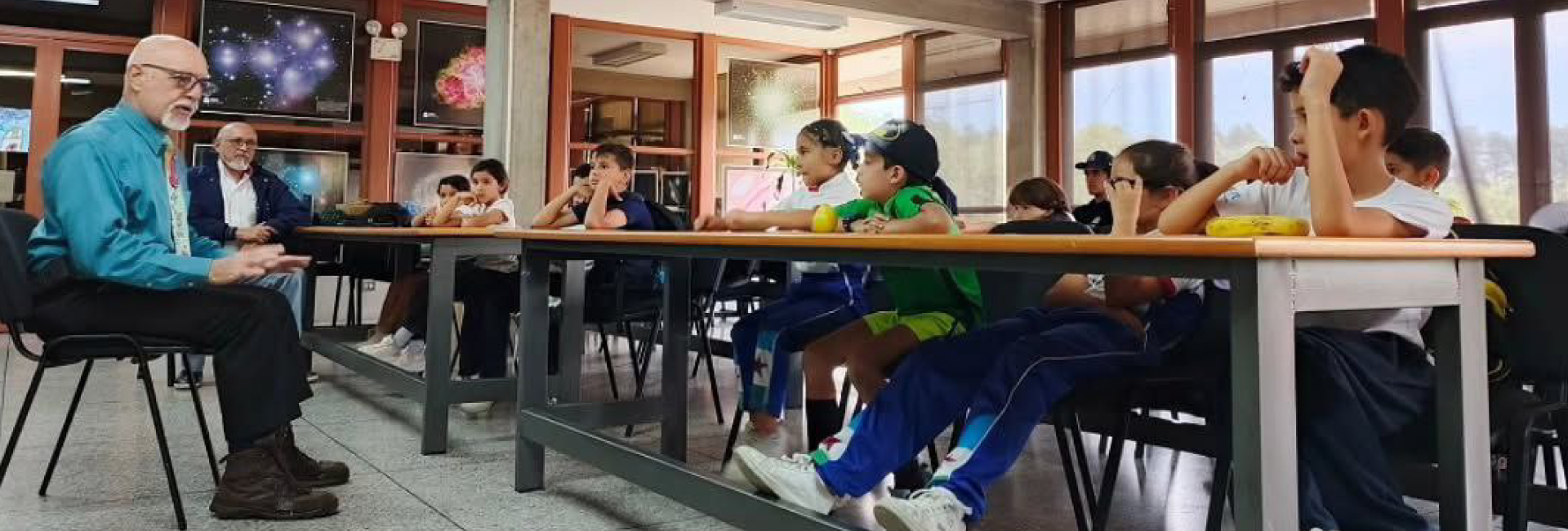
Semilleros Científicos de la Fundación CIDA fortalecen conocimientos sobre astronomía

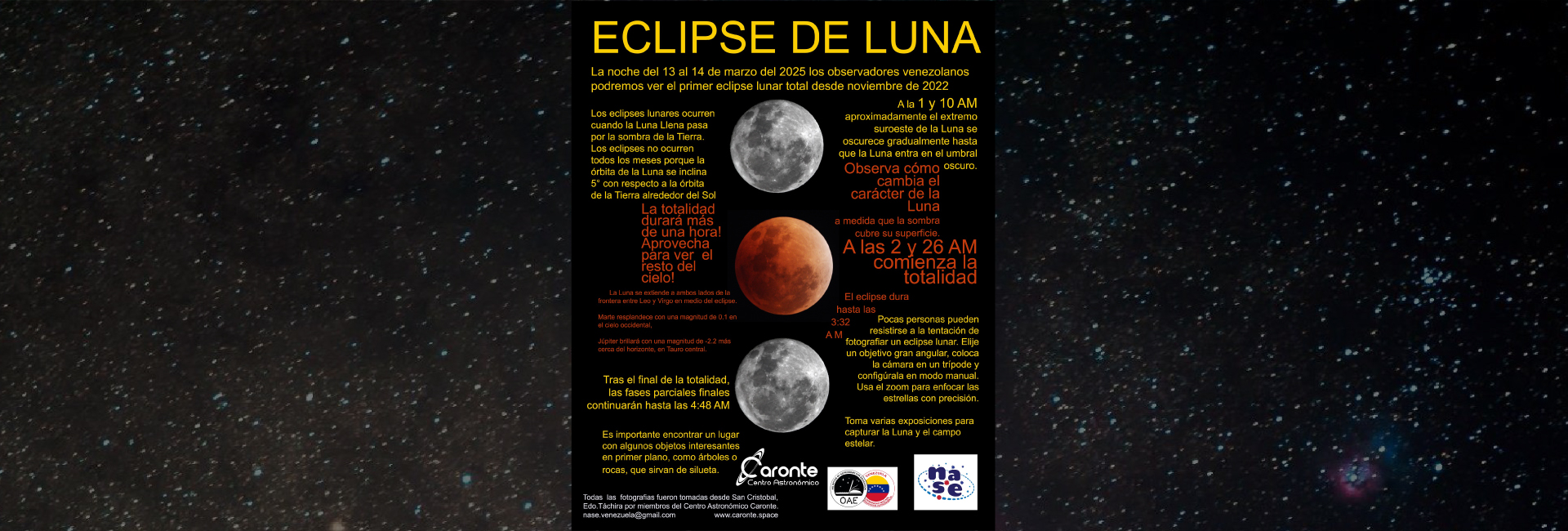
Eclipse de luna (noche del 13 al 14 de marzo 2025)

  • Imagenes del día Nasa.gov

    • New Crew Members Welcomed to International Space Station

      From left, Expedition 74 flight engineers Anna Kikina and Pyotr Dubrov of Roscosmos, and Anil Menon of NASA pose for a portrait while holding a cake celebrating their recent arrival aboard the International Space Station.
    •  Crews Move Artemis IV Liquid Hydrogen Tank

      Crews at NASA’s Michoud Assembly Facility in New Orleans transport the 130-foot-tall liquid hydrogen tank out of a production cell inside the main factory building into a detached test building on a separate portion of the 829-acre site.
    • A New Look – and Sound – for Messier 94

      Messier 94 is a spiral galaxy with a bright inner ring around it, called a starburst ring, where new stars are forming.
    • Psyche Approaches Mars

      This composite of images taken by NASA’s Psyche mission shows the crescent of Mars grow as the spacecraft approached the planet for a gravity assist from May 2 to May 15, 2026. Because Psyche approached Mars from a high phase angle, the planet appeared as a thin crescent in the days running up to the close approach, lit by sunlight...
    Ver esta publicación en Instagram

    Una publicación compartida de Diario del Pueblo (@diariodlpueblo)

  • Space.com

    • I'm not an astronaut, but I went to the International Space Station (sort of)

      NEW YORK — I'm the kind of person who, every so often, falls into accidental daydreams about the concept of space. Usually because I'm listening to some sort of sad girl Spotify playlist, I start feeling infuriated that we may never learn the true meaning of the cosmos and become embarrassingly poetic about our isolation on Earth. I tend to...
    • We talk with astronaut Michael Foale about the 1997 Space Station Mir crisis: 'He took all the blame of the collision on his shoulders'

      All systems are go! PBS just launched the second episode of its "Once Upon a Time in Space" miniseries on Tuesday, titled "The Russian Thing," and we’ve got an exclusive clip from the harrowing chapter that focuses on near disasters aboard the Space Station Mir in 1997. In addition to the video, we’re also proud to share an exclusive interview...
    • This Week In Space podcast: Episode 220 — First on Mars

      On Episode 220 of This Week In Space, Rod Pyle and Tariq Malik are joined by Dr. Pascal Lee and astrobiologist Dr. Penny Boston to mark the 50th anniversary of Viking 1's landing on Mars.This week, we cover how Starship Flight 13 finally prepares to launch amid a legal battle over SpaceX's proposed land swap at Starbase, plus a...
    • An off-the-shelf camera could help us find more black holes smashing together

      Fixing a problem inside one of the world's most sophisticated scientific observatories might seem like the kind of challenge that demands a multimillion-dollar upgrade or revolutionary new technology. But for scientists working on the Laser Interferometer Gravitational-Wave Observatory (LIGO), which listens for ripples in spacetime generated by cosmic collisions like merging black holes, the solution to a mild but persistent...

    Rho Ophiuchi (imagen de NIRCam)
  • El lado oscuro de la luz

    Caronte 20 febrero, 2025 6 marzo, 2025

    EL LADO OSCURO DE LA LUZRESUMEN Desde sus albores la humanidad usó el fuego para…

    Leer más

    Introducción a la Iluminación Pública

    Caronte 19 febrero, 2025 4 marzo, 2025

    Y Como afecta la Contaminación Luminosa

    Leer más

    «‹9101112›

    Cúmulo de galaxias MACS J1423 (imagen de NIRCam)
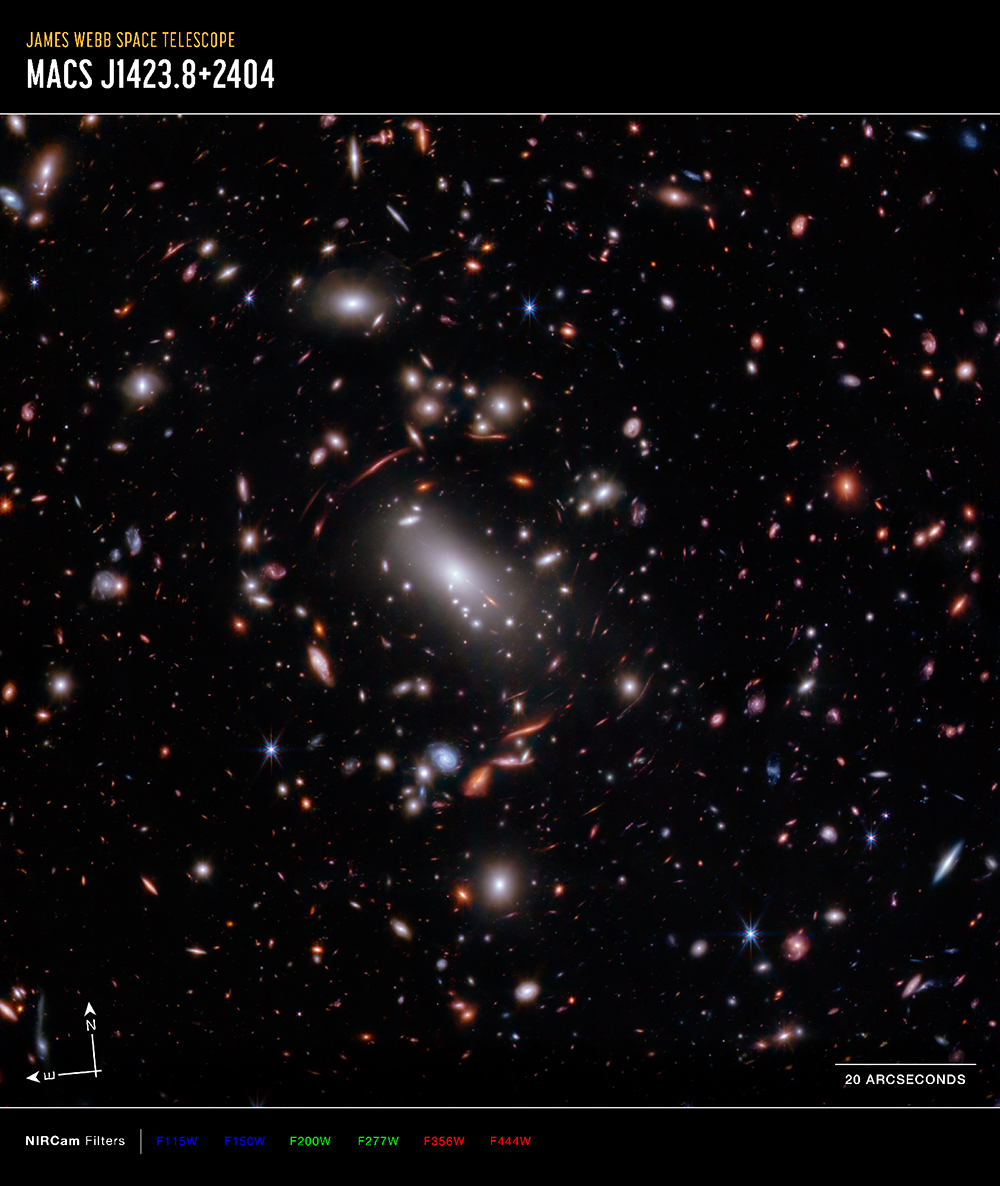

    Miles de galaxias brillantes están unidas entre sí por su propia gravedad y forman un cúmulo masivo clasificado formalmente como MACS J1423.
    El óvalo blanco brillante más grande es una galaxia elíptica supergigante y el miembro dominante de este cúmulo de galaxias. El cúmulo de galaxias actúa como una lente, magnificando y distorsionando la luz de los objetos que se encuentran detrás de él, un efecto conocido como lente gravitacional que tiene grandes beneficios para la investigación. Los astrónomos pueden estudiar las galaxias con efecto lente en detalle, como la galaxia Firefly Sparkle.
    Esta imagen de 2023 es de la NIRCam (cámara de infrarrojo cercano) del telescopio espacial James Webb. investigadores utilizaron Webb para estudiar el mismo campo que el telescopio espacial Hubble fotografió en 2010. Debido a su especialización en imágenes de infrarrojo cercano de alta resolución, Webb pudo mostrar a los investigadores muchas más galaxias con mucho más detalle.
    Web oficial Telescopio James Webb
    © Caronte 2025. Todos los derechos reservados.
    Funciona con Nirvana & WordPress.
    Facebook Twitter Instagram